

Table of Contents


Chapter 01
Hubs
Permanent spaces for vibrant exchange, strong alliances and a shared vision are essential if we are to meet the major challenges of our time.
The Allianz Foundation Hubs embody the Foundation’s Europe-wide, cross-border and cross-disciplinary approach. The programme supports organisations working at the intersection of civil society, the arts, culture and climate action. These multi-year institutional collaborations with regionally networked partner organisations foster a decentralised way of working across borders and disciplines.
Each Hub can draw on multi-year structural funding to develop both institutionally and at programme level, as well as to build regional links with partners and grassroots movements. The Hubs also work together on joint projects and programmes, supported by peer learning and staff exchanges.
Highlights
Mini Summits
In 2025, the Allianz Foundation Hubs concluded their two-year Mini-Summits series, where each of the five Hubs took turns hosting the other four. Following the first Mini-Summits in Italy (Fondazione Studio Rizoma) and Kosovo (Autostrada Biennale) in 2024, the series concluded in 2025 with events in Turkey (Postane, April), Spain (INLAND, May) and Brussels (Recyclart, September).
Working together in a rooftop garden at Postane overlooking Istanbul, visiting a local cattle market in the mountains of northern Spain, or taking part in a woodworking workshop led by production teams from several Hubs in the warehouse spaces of Recyclart – experiencing the working methods of partner organisations at such close range provided new inspiration for advancing the network.

Mini Summits
Postane
Turkey, April 2025


Mini Summits
INLAND
Spain, May 2025


Mini Summits
Recyclart
Belgium, September 2025
Teatro Garibaldi Palermo
Fondazione Studio Rizoma was selected by the City Council of Palermo to curate the programme of the historic Teatro Garibaldi for the next eight years. The first events and performances took place in November with the “Between Land and Sea” festival and in December 2025 with the premiere of the theatre production “Campobello”. The festival centred on the theme “Significato” and explored how meaning is shaped across different contexts. Events ranged from site-specific artworks and discussions to interdisciplinary workshops that connected artistic practice with scientific and social inquiry from across the Mediterranean.

Teatro Garibaldi will become a vital focal point in the cultural life of Palermo and the wider Mediterranean region. The building will also provide office space for Rizoma.
5th Autostrada Biennale Prizren
2025 marked the fifth edition of the Autostrada Biennale in Prizren, Kosovo (5 July–5 October 2025). Curated by Erzen Shkololli and titled Unfolding Currents: The Pulse of Time, the exhibition presented works by 24 artists and attracted more than 44,000 international visitors. Representing diverse backgrounds and generations, they explored themes of local entanglements, urban transformation and collective memory. Across five locations, they engaged with historical sites in the country’s second-largest city. By reinterpreting earlier works and commissioning new projects, this edition fosters a vibrant dialogue in the present while offering a critical reflection on the past.
One of the venues was the historic Shani Efendi House, which was restored by Autostrada with support from the Allianz Foundation and will continue to serve as a cultural events space.

5th Autostrada Biennale Prizren
Anita Mucolli
© Tuğhan Anıt

5th Autostrada Biennale Prizren
Nathan Colley
© Tuğhan Anıt

5th Autostrada Biennale Prizren
Tamara Grcic
© Tuğhan Anıt
Here is a full list of Allianz Foundation Hubs:

Prizren
Autostrada Biennale, Kosovo

Palermo
Fondazione Studio Rizoma, Italy

Istanbul
Postane, Turkey

Madrid, Mallorca, Northern Spain
INLAND, Spain

Brussels
Recyclart, Belgium


Chapter 02
Fellows Programme
Selma Selman photographed by Marko Ilić
In a context of growing polarisation, shrinking civic space and accelerating ecological crises, the Fellows Programme invests in independent individuals working at the frontlines of social transformation.
Thought leaders making a difference
Fellows operate at the intersection of civil society, the arts, research, journalism and environmental protection. The programme provides financial support in the form of a €25,000 fellowship, alongside tailored support such as mentoring, connections with relevant experts, and capacity‑building workshops, in order to enable this work in a sustainable way. It also creates space for reflection, renewal and resilience.
0 Fellows
working at the frontlines of social transformation
0€
to enable their work in a sustainable way

Our Fellows and partners in Brussels, connecting artistic practice with climate and democracy work. Photo: Melissa Fauve for Recyclart.
A more focused and connected fellowship
The 2025 cohort consists of eleven Fellows, who received a ten-month stipend, complemented by tailored support from the Foundation team, including mentoring, regular check-ins and opportunities for collective exchange. All of them emphasised the value of engaging with peers who approach shared challenges from different perspectives. Workshops, gatherings and connections to the wider Allianz Foundation network laid the groundwork for long-term collaboration and solidarity. The Fellows’ contributions to the Hubs Mini-Summits are one example of how the programme linked individual practice with institutional collaboration.
At the Allianz Foundation Hubs meeting in Brussels, hosted by Recyclart, Fellows demonstrated how artistic practices can amplify marginalised voices in climate advocacy and democratic resilience. Love Ssega presented his work using music and performance to mobilise communities for climate action, while Rémy Bonny guided partners through the European Quarter, offering insights into the contested political landscape in which democratic advocacy operates today.


Alliance for Socially Engaged Arts
Building on its experience with individual fellowships, the Allianz Foundation expanded its engagement in 2025 by co-founding the Alliance for Socially Engaged Arts. Through this partnership with twelve other philanthropic foundations from across Europe, the Foundation contributes its expertise to a collective European effort to support practitioners working at the intersection of art and social change.

Chapter 03
Grantmaking focus
The Allianz Foundation supports projects addressing civil society, ecological and artistic or cultural issues with the aim of fostering systemic change.
Support is provided through an annual call for proposals, as well as through third‑party funded and cooperative projects implemented within specific funding frameworks. Recognising that the impacts of climate change and biodiversity loss, experiences of discrimination, and threats to free, diverse and democratic societies transcend national borders, the Foundation focuses its engagement across Europe.
In 2025, the Allianz Foundation and its partners were active in:
0 countries
and provided
0 million €
in funding to
0 projects
| Projectname | Details |
|---|---|
| Common Roots planet | Details |
| Masahat society | Details |
| Capacity building for grassroots initiatives in the built environment planet | Details |
| Earthquake Solidarity Funds society | Details |
| Sufficiency strategies for housing innovation and Flanders’ building transformation (Shift) planet | Details |
| Digital transformation and democracy: social media's influence on the development of children and young people society | Details |
| Fiscal policies for industrial innovation and decarbonisation planet | Details |
| Europe’s forests protected by Europe’s people planet | Details |
| Pathways to renewal – Syria Cultural Forum planet | Details |
| Forensic Architecture: tools for counter-authoritarianism in Turkey and abroad society | Details |
| Mission Wertvoll society | Details |
| Rebalancing transparency and data protection to foster a vivid space for media and civil society in Europe society | Details |
| Kraftwerk Zukunft society | Details |
| Resilient democracies in Central- and East Europe society | Details |
| AusARTen 2025 people | Details |
| Syrian and Ukrainian open-source investigations society | Details |
| Democratic future for Ukrainian theatre, act by act people | Details |
| Protecting exile journalism in Europe society | Details |
| Future of Polish agriculture planet | Details |
| İÇ İÇE people | Details |
Show more
Selected Highlights
PEOPLE
Supporting the future of theatre in times of war
The project Democratic Future for Ukrainian Theatre, Act by Act by Nafta Theatre takes place in the Ukrainian city of Kharkiv, close to the frontlines. It addresses the limited opportunities for theatre education and production for emerging theatre professionals under current conditions. Nafta offers young artists, selected through open calls, the chance to develop and stage their own performances under professional mentorship.
Train 723
Kharkiv‑based Nafta Theatre built the play Train 723 as a kaleidoscope of perspectives. It brings together testimonies of railway workers and passengers, reflecting everyday life, labour, and emotional attachment to Ukrainian Railways.
The project began with research and a road trip. This involved travelling between locations, including the director’s hometown. Meetings with a local historian and visits to the railway station helped gather material for the play. Even this initial phase carried its own challenges: ice-covered roads and long drives required continuous focus.

It started with a road trip
The project began outside the rehearsal room.

Cold spaces
During the coldest weeks, indoor temperatures fell to around +5°C.

Interruptions and time pressure
The poster photoshoot was repeatedly interrupted by air raid sirens.

Support systems
The production process also depended on informal networks of support, such as a café across the street.

The premiere
The premiere was enjoyed by a full house.
Train 723 refers to the train connecting Kharkiv and Kyiv
The poster photoshoot took place near the train station. It was repeatedly interrupted. Air raid sirens divided time into short, unpredictable intervals, forcing immediate evacuations and halting work. The selected image was taken during one of these narrow windows, minutes before another interruption, leaving no scope to repeat, refine, or rethink. Every decision had to be made under pressure.
Rehearsal spaces were often temporary, changing with little notice as electricity went off, temperatures dropped, or buildings became unusable. This meant constant movement between locations. During the coldest weeks, indoor temperatures fell to around +5°C. Pipes froze. There was no heating or running water, and rehearsals were shaped by physical endurance rather than planned schedules.
„Thanks to the Allianz Foundation, we are able to build a unique space in frontline Kharkiv for young artists to learn, grow professionally, and implement their own performance ideas, nurturing a new generation of socially responsible, proactive theatre professionals. In the context of russia's military aggression against Ukraine, we seek to provide this generation with the support and tools for influence, giving them the opportunity to shape the times ahead and the reality in which they choose to live.“
Olesia Zakharova
Project Manager at Nafta Theatre
Project Manager at Nafta Theatre
The production process depended not only on formal rehearsal spaces but also on informal networks of support, such as a café across the street, which provided warmth, food, and basic facilities at short notice. This support was not part of the production plan but became essential to its continuation.
Despite continuous challenges, the premiere was enjoyed by a full house, continuing Nafta's purpose of highlighting young artists and directors in Kharkiv to develop and realise their visions.

SOCIETY
Protecting exile journalism in Europe against transnational repression
Reporter ohne Grenzen e. V. (RSF) works to protect journalists in exile who face targeted surveillance, defamation and attacks by state actors. The funded project provides direct support to affected journalists. This includes support with the asylum procedure as well as assistance in finding a lawyer as well as preliminary advice on residency and social security law, alongside financial support in individual cases, for example for legal fees or psychotherapy.
„This funding enables us to compile and highlight information on transnational repression against journalists in order to raise public and political awareness of a growing, yet largely unknown problem and to provide effective support to those affected.“
Dr Noura Chalati
Advocacy Officer, RSF e.V.
Advocacy Officer, RSF e.V.
Through coalition-building, public awareness work and the amplification of voices in exile, RSF contributes to safeguarding press freedom as a cornerstone of democratic societies.

PLANET
Capacity building for grassroots initiatives in the built environment
The initiative Architects for Future in Germany is working to establish a European coordination structure for a just transition in the built environment.
„What makes this funding important is that it allows us to connect grassroots actors across Europe. By strengthening collaboration, shared learning and collective decision-making, we can amplify local efforts into a coordinated movement with real political and societal impact.“
Luisa Ropelato
Architects for Future, Germany
Architects for Future, Germany
To date, the coordination work has taken shape through two European Assemblies: an online assembly in July 2025 and an in-person assembly in Frankfurt am Main. Further assemblies and exchange formats are planned and will continue to shape this shared learning and action process across borders.


Daria S via Unsplash
Europe’s forests protected by Europe’s people
The project Europe’s Forests Protected by Europe’s People, implemented by the Environmental Investigation Agency and Pracownia, strengthens forest protection in Europe, with a particular focus on Romania and Poland. A central element of the project is the active involvement of civil society. Environmental organisations, local experts and citizens contribute data, field knowledge and public pressure.
„Support from the Allianz Foundation has enabled us to connect forest defenders across borders, share innovations and build momentum for systemic change. We help partners to analyse forest sector practices, identify key actors and market dynamics, and advance constructive reforms in Romania, Poland and beyond. In this way, isolated approaches are joined in a shared cross-border model for forest protection and civic oversight.“
Susanne Breitkopf
Environmental Investigation Agency, Germany
Environmental Investigation Agency, Germany
This collaboration enables people to take an active role in protecting forests and to advocate for more effective approaches to forest governance. In the context of this project, the tracking system for timber harvesting already in place in Romania is developed further and strengthened through coordinated engagement by civil society organisations, making it partially transferable to other countries.
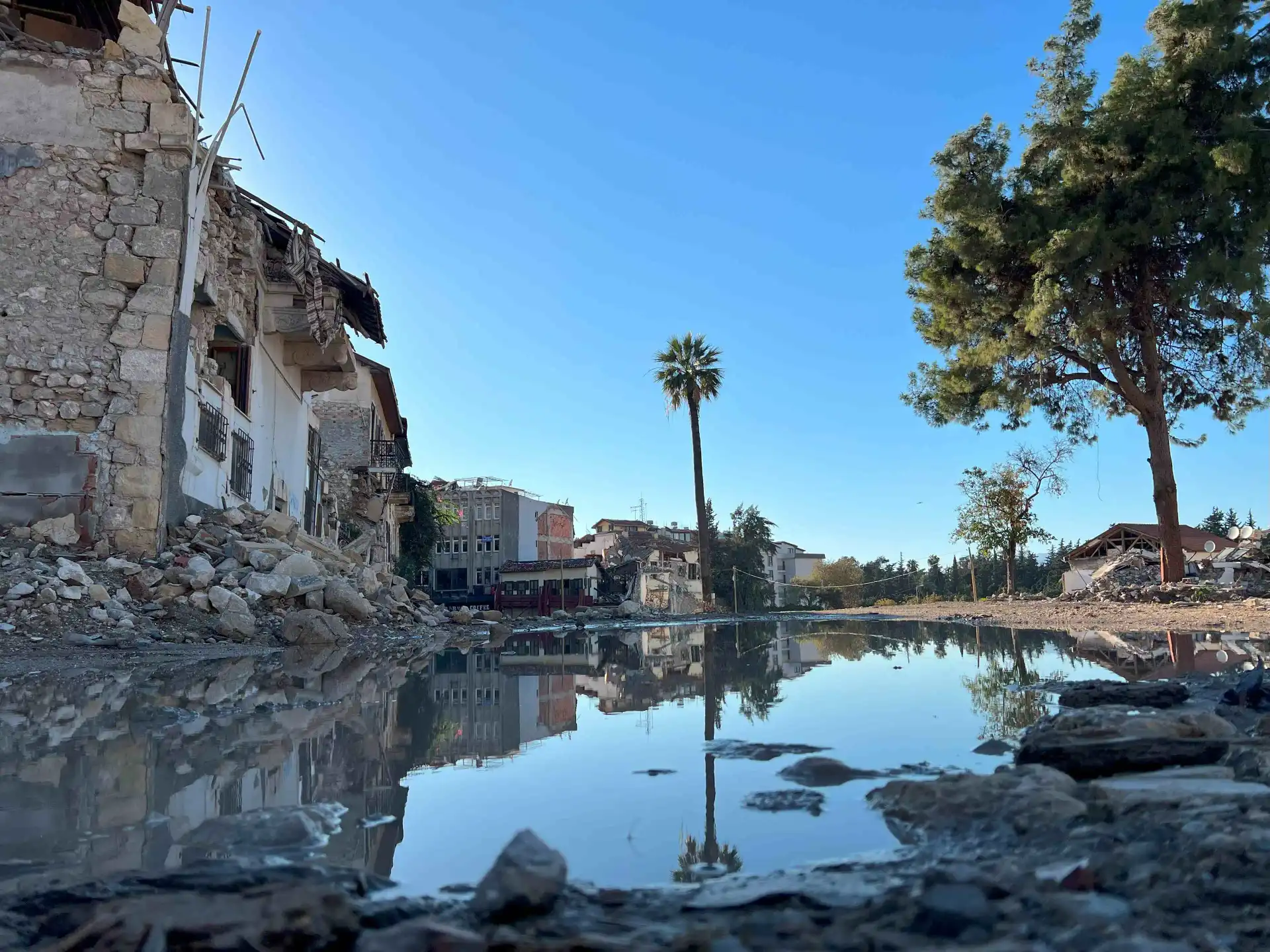
Antakya 2023 © Nesime Karateke
Earthquake Solidarity Fund
The devastating effects of the earthquake along the Turkish–Syrian border in February 2023 are still being felt today. To continue supporting the rebuilding of civil society, culture and local heritage in south-eastern Turkey, Postane and the Allianz Foundation extended their joint Earthquake Solidarity Fund in 2025.
Established in 2024 together with the European Cultural Foundation, the fund supports and connects projects and organisations that focus on strengthening the rights of women and future generations in the region.
Third-party funded projects and cooperation
Alongside its own grantmaking, the Allianz Foundation pools its funding with resources from partner organisations. In 2025, the European Climate Hub continued its work. Launched in 2022 in cooperation with the Climate Imperative Foundation, the initiative supports partner organisations working together to advance the European Green Deal and to address the climate crisis.
With support from the European Climate Hub, the Council on Economic Policies (CEP) advanced a European narrative highlighting the critical role of innovation and decarbonisation for Europe’s prosperity through its project “Fiscal Policy for Industrial Innovation and Decarbonisation”. In this context, the project identified ways to create fiscal space to achieve EU and national climate targets, as well as outlining what a coherent policy mix in this area could look like. These findings and recommendations were introduced into the policy debate through publications and high-level expert discussions.
Operational budget for the European Climate Hub: 310,000 euros.

Chapter 04
Movers of Tomorrow
Young people across Germany are already working hard to make society fairer, more open, and more sustainable.
They organise climate initiatives, advocate for equal opportunities, support their communities, and create spaces for dialogue and participation. Yet many of these efforts remain underrecognised. The Movers of Tomorrow Award, the Allianz Foundation’s award for young civic engagement, exists to address this gap.
The programme supports young people aged 16 to 24 who are committed to social justice, open societies, and climate and environmental protection. At its core, the Movers of Tomorrow Award is built on a simple idea: when young people receive trust, visibility, and support, they can expand the reach of their work, not only individually, but together. Accordingly, the programme combines public recognition, financial support, networking opportunities, and spaces for exchange.
Just as importantly, it challenges a common pattern in public discourse. Young people are often described as the “future,” while their current contributions are overlooked. The Movers of Tomorrow Award instead presents young people as active actors in today’s society, whose views and civic engagement deserve recognition.
In 2025 – it’s second year – the Movers of Tomorrow Award reached more young people and communities than ever before.
0 votes
cast during online voting phase
0 people
reached on social media
0 nominations
– this number rose from 94 in 2024.
0 visits
– almost 2.6 times the number of website visits in 2024.
The number of nominations rose from 94 in 2024 to 143 in 2025, and more than 26,000 votes were cast during the subsequent online voting phase. The programme website recorded around 247,000 visits, almost 2.6 times the number in 2024. Social media content reached more than 550,000 people during the voting period, 93 per cent of whom had not previously followed the programme.
The newly introduced three-vote-voting process also encouraged deeper engagement. Second and third vote options prompted many participants to explore multiple profiles and causes.
A programme that grows through participation
The 50 young people receiving the highest number of votes formed the 2025 Movers cohort. Each received 1,500 EUR in prize money and were invited to a trip to Berlin for the award ceremony and a networking workshop with other Movers.
In a final selection round, a jury selected ten participants for their outstanding engagement, who then received more awards and 3,500 EUR each in additional prize money. The jury included the Allianz Foundation’s CEO, Christian Humborg, Andreas Schmid from the Allianz Betriebs‑ und Vertriebs AG (ABV), Katarina Peranić from the Deutsche Stiftung für Engagement und Ehrenamt (DSEE), and six jury award winners from the 2024 Movers cohort.
Outstanding engagement
The 2025 jury awardees were:


0
young award winners from all over Germany
0
jury award winners
0 €
for the award winners
0 €
resources allocated to the Movers of Tomorrow Award
All programme stages, including the nominations, voting, and the awards ceremony reflected the diversity of young people in Germany. Participants came from all 16 federal states, a wide range of social backgrounds, and diverse fields of engagement. The Allianz Foundation thanks its institutional partner ABV for its support in 2025.
„„Because I didn’t have time to earn money during my volunteer work, I was very grateful that I could put the prize money into my savings account. It helped me continue my engagement.““
Feedback
Mover of Tomorrow, 2025
Mover of Tomorrow, 2025
In 2025, the alumni network was further expanded. Regular exchanges took place on topics including organisational development, funding opportunities, and peer support. These spaces enable participants to share experiences, learn from one another, and build longer‑term relationships across regions and areas of engagement.
““Seeing how many other young people are engaged is truly inspiring. It gave me new energy to keep going, to stay committed and to not lose sight of the bigger goal. I am really looking forward to supporting the next group of young nominees this year. ””— Mover of Tomorrow, 2025
Young people shaping the programme
The Movers of Tomorrow Award is not just designed for young people, but together with them. Former jury awardees from 2024 returned in 2025 as jury members and expert contributors. Movers also had a strong involvement in the award ceremony itself, including through speeches, artistic formats, and participatory elements.
This reflects a central principle of the programme: young people are not only participants, but co‑creators.


Chapter 05
Research
In 2025, research was carried out for the second edition of the Allianz Foundation Next Generations Study, to be published at the start of 2026.
It provides European civil society leaders and decision makers with insights into young people’s visions for a future society and the actions they take to help shape it. It is based on a large-scale representative survey carried out among more than 8,500 young people aged 16 to 39 in France, Germany, Italy, Poland and Spain. Together, these five countries account for approximately 65 per cent of Generation Z and Millennials across the European Union.
The study was conducted in mid-2025 in collaboration with three research partners: the SINUS Institute (Dr Marc Calmbach), the WZB Social Science Center (Prof. Michael Zürn) and the Leibniz Institute for the Social Sciences (Dr Ayline Heller). Their expertise in youth research, democratic backsliding and psychometric scale development made a vital contribution to the quality and depth of the findings.
Research instruments were refined not only in close collaboration with the academic partners, but also informed by the on-the-ground expertise of five civil society partners in the participating countries. These included Vox Public (France), Gesellschaft für Freiheitsrechte (Germany), CILD (Italy), the New Community Foundation (Poland) and Palumba (Spain).
Following the fieldwork, joint discussions with these partners focused on interpreting the findings and co-developing dissemination strategies tailored to national contexts. In the third quarter of 2025, civil society, media and government stakeholders received a preview of key findings in high-level national and international settings, including the re:publica and Innocracy conferences in Berlin and the Athens Democracy Forum. Both the Allianz Foundation and central findings from the Study were referenced in The New York Times’ reporting from the Forum.


Chapter 06
Finance
Since its launch in 2022, the Foundation has supported a total of 155 projects with a combined funding of 15 million euros.
Particular emphasis has been placed on initiatives operating at the intersection of civil society, ecology, culture and the arts to advance just, resilient societies and a climate‑neutral future.
Working for the network
The members of our team have a wide range of professional qualifications, language skills and intercultural experience. At the end of 2025, the Foundation employed a total of 17 members of staff. All our teams are actively involved in work at the intersections of the areas "For empowered people", "For open societies", "For a living planet". In addition, team members are part of the Executive Board and the Communications and Administration & Finance teams. Find out more about our team here.
0
employees
0.0
full-time equivalents/FTEs
0.0 %
administrative expense ratio
The Foundation’s administrative expenditure on materials and personnel totaled 1.2 million euros. These expenses are not directly assigned to any funding or operative projects.
Financial statements
Overview | 2025 (EUR) | 2024 (EUR) |
|---|---|---|
Income | ||
Donations received | 5,035,000 | 6,040,240 |
Third-party funding and other operating income | 427,806 | 1,921,760 |
Asset management result | 3,319,372 | 3,055,102 |
Total income | 8,782,177 | 11,017,103 |
Expenditure | 2025 (EUR) | 2024 (EUR) |
Personnel expenses | 597,314 | 893,746 |
Other operating and administrative expenses | 620,221 | 1,083,257 |
Operating expenses | 1,217,535 | 1,977,003 |
Staff and operational costs of funded projects | 446,357 | 428,128 |
Allianz Foundation Fellowship | 655,550 | 477,919 |
Allianz Foundation Hubs | 1,938,781 | 835,500 |
Allianz Foundation Research | 487,948 | 509,195 |
Strategic operational projects | 610,218 | 2,726,288 |
Grants programme | 2,557,857 | 2,860,979 |
Movers of Tomorrow Award | 277,094 | 351,849 |
Expenses for the Allianz Foundation’s charitable purpose | 6,973,804 | 8,189,858 |
Total expenses | 8,191,339 | 10,166,861 |
Annual surplus | 590,838 | 819,657 |
Balance sheet
Overview | 2025 (EUR) | |
|---|---|---|
Assets | 123,561,482.39 | |
A. Fixed Assets | ||
I. Tangible Fixed Assets | 42,783 | |
II. Investments | 117,185,044.20 | |
B. Current Assets | ||
I. Trade Receivables | 22,465.13 | |
II. Cash and Cash Equivalents | 6,304,450.13 | |
C. Prepayments and Accrued Income | 6,739.93 | |
Equity and Liabilities | 123,561,482.39 | |
A. Equity | ||
I. Foundation Capital | 100,000,000 | |
II. Revenue Reserves | 14,213,763.38 | |
III. Revaluation Reserve | 4,035,334.67 | |
IV. Retained Earnings Brought Forward | 403,636.58 | |
B. Provisions | 157,325 | |
C. Liabilities | 4,751,422.76 |
Annual financial statements and data protection
The Allianz Foundation’s 2025 annual financial statements were audited by the Solidaris Revisions-GmbH Wirtschaftsprüfungsgesellschaft Steuerberatungsgesellschaft in Berlin and endorsed with an unqualified audit certificate.
In 2025, the Allianz Foundation cooperated with the 2B Advice GmbH in Bonn to ensure compliance with data protection regulations and to comply with its tasks under Article 39 of the General Data Protection Regulation (GDPR).


Chapter 07
Governance & Climate Responsibility
The Allianz Foundation is a foundation under civil law with legal capacity and its legal domicile in Munich.
Its supervisory authority is the Government of Upper Bavaria. Its offices are located in the Allianz Forum at Pariser Platz in Berlin. The Allianz Foundation has a total endowment capital of 100 million euros. The Foundation’s funding is drawn from the income that the endowment capital generates. In addition, from 2022 up to and including 2031, it will receive an additional annual donation of 5 million euros from Allianz SE. The Foundation also draws on third-party funding from partners and through cooperation with them.
Executive Board
Since April, the Allianz Foundation has been led by Dr Christian Humborg as CEO. Michael Greser, who served as interim CEO, stepped down from his role with effect from 31 July 2025.
- Dr. Christian Humborg (from April 2025)
- Michael Greser (until July 2025)
Board of Trustees
- Sergio Balbinot (Chair since June 2025)
- Lauren Day
- Emilia Macarie
- Norbert Schlund
- Susanna Krüger (since July 2025)
- Prof. Dr. Guido Palazzo (since July 2025)
- Dr. Christof Schenk (since July 2025)
- Dr. Nicole Schneider-Deeg (until June 2025)
- Ludovic Subran (until June 2025)
- Dr. Werner Zedelius (Chair until May 2025)
The Board of Trustees met on 8 July and 9 December 2025 during the reporting year.
Climate responsibility
The Allianz Foundation is committed to supporting climate justice in societies. To strengthen its ambitions in this area, the Foundation developed its own Climate Responsibility Framework, previously referred to as the “Beyond Net Zero” strategy. The framework builds on existing concepts from the Climate Contribution Model and further develops them in line with the Foundation’s role, field of activity and responsibility as a charitable organisation.
As a foundation for this framework, the Allianz Foundation calculated its greenhouse gas emissions in accordance with the Greenhouse Gas Protocol. This analysis enables the identification and quantification of key emission sources and provides a basis for defining effective measures to reduce emissions swiftly and systematically.
To further consolidate its approach, the Allianz Foundation funded the Climate Contribution Hub, developed and operated by the NewClimate Institute. The Hub provides partners and other organisations with accessible guidance, practical tools and, where needed, expert support to advance their own climate responsibility efforts.
Top